
Own Your Cloud: Why Infrastructure Ownership Matters More Than Ever
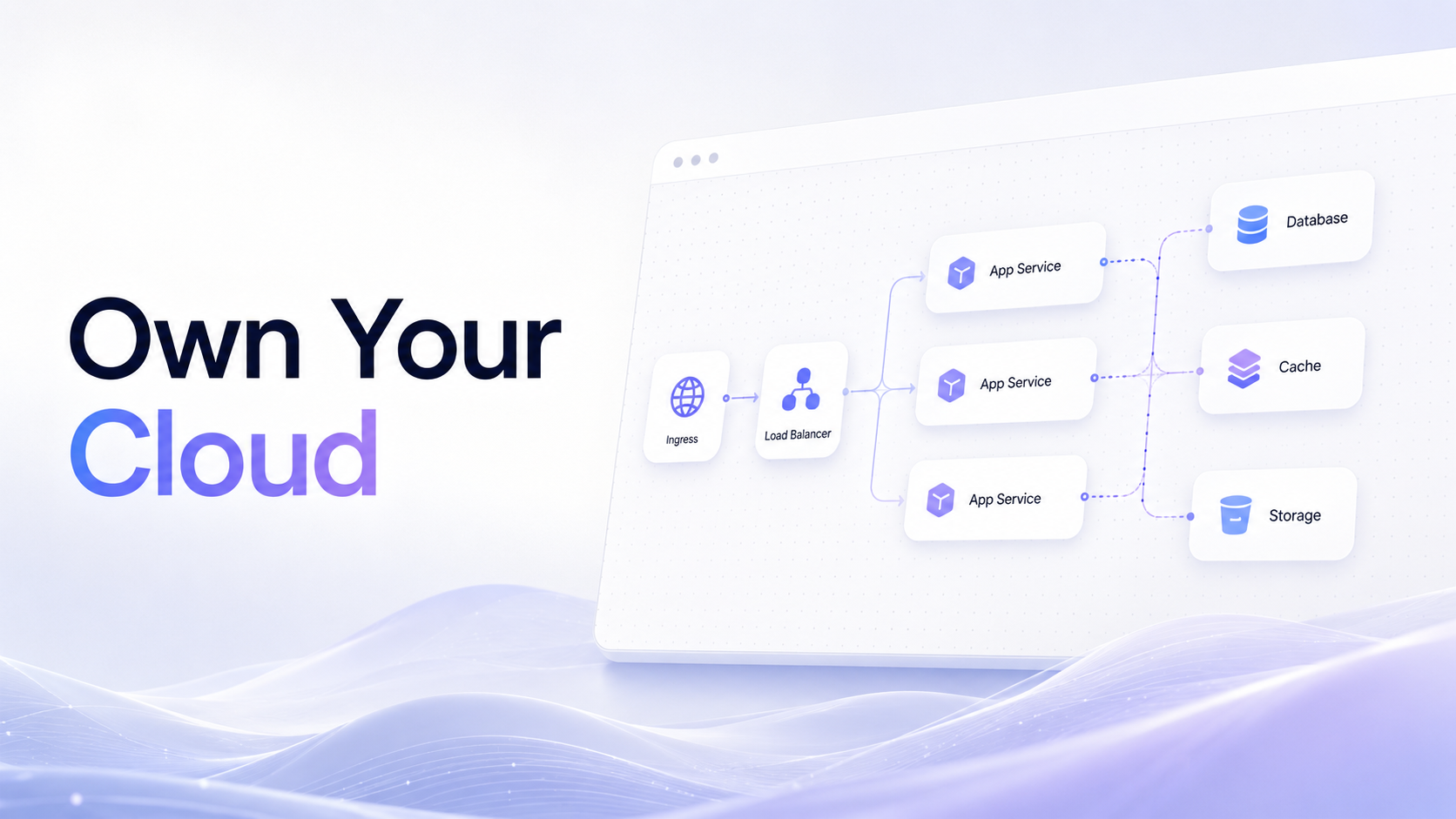
Cloud infrastructure has gone through a major shift over the last decade. Developers no longer need to think about racks, servers, networking hardware, or physical capacity planning. Modern platforms have made it possible to deploy applications faster than ever, connect repositories, provision databases, configure domains, and ship products without building internal platform teams from day one.
That progress matters. Platforms such as Vercel, Render, and Railway helped normalise better developer experience around deployment. Vercel supports Git-based deployments, preview environments, and multiple deployment methods including Git, CLI, deploy hooks, and APIs. Render allows developers to deploy web services from Git providers, public repositories, or Docker images, and provides managed services such as PostgreSQL. Railway supports services deployed from GitHub repositories, local directories, or Docker images, along with database templates and service primitives for application stacks.
These platforms improved deployment convenience. But convenience is not the same as ownership.
As applications mature, teams often discover that the platform that helped them move quickly early on can become a constraint later. The issue is not simply whether an app can be deployed. The bigger question is where that app runs, who controls the infrastructure, how much visibility the team has, how easily the system can scale, and whether the organization can move without a painful migration.
That is why infrastructure ownership matters more than ever.
Gateways is built around this principle: teams should be able to deploy and manage cloud infrastructure with the simplicity of a modern platform, while keeping their infrastructure inside their own AWS, Google Cloud, or Azure account. It is not another hosted runtime that asks teams to surrender control. It is a cloud operations console for infrastructure they own.
The Convenience Layer Has a Trade-Off
Managed hosting platforms are popular because they reduce friction. For many teams, the appeal is obvious. Connect a repository, configure a few settings, deploy the application, and avoid the complexity of raw cloud consoles. This workflow is especially attractive when a team is validating an idea, launching an MVP, or trying to avoid early DevOps overhead.
The trade-off appears later.
When workloads run inside a platform-owned infrastructure layer, the team’s operational model becomes tied to that platform’s architecture, pricing structure, supported regions, runtime behaviour, networking model and deployment abstractions. That may be acceptable for simple applications, but growing systems usually need more control over infrastructure decisions.
Teams eventually start asking questions such as:
- Can we choose the best cloud provider for this workload?
- Can we place infrastructure in a specific region for latency or compliance?
- Can we integrate deeply with services already running in our cloud account?
- Can we control networking, billing, permissions, storage, and security policies directly?
- Can we migrate without rebuilding our deployment model from scratch?
Managed platforms are optimised to hide infrastructure. That can make onboarding faster, but it also limits how much of the system teams can own, inspect, and adapt. For organisations building serious products, infrastructure should not become a black box.
Gateways takes a different approach. It gives teams a visual and operational layer over their own cloud infrastructure. Developers still get simpler deployment and management workflows, but the underlying resources remain in the customer’s cloud account. That distinction is central to long-term flexibility.
Infrastructure Ownership Is About Control, Not Complexity
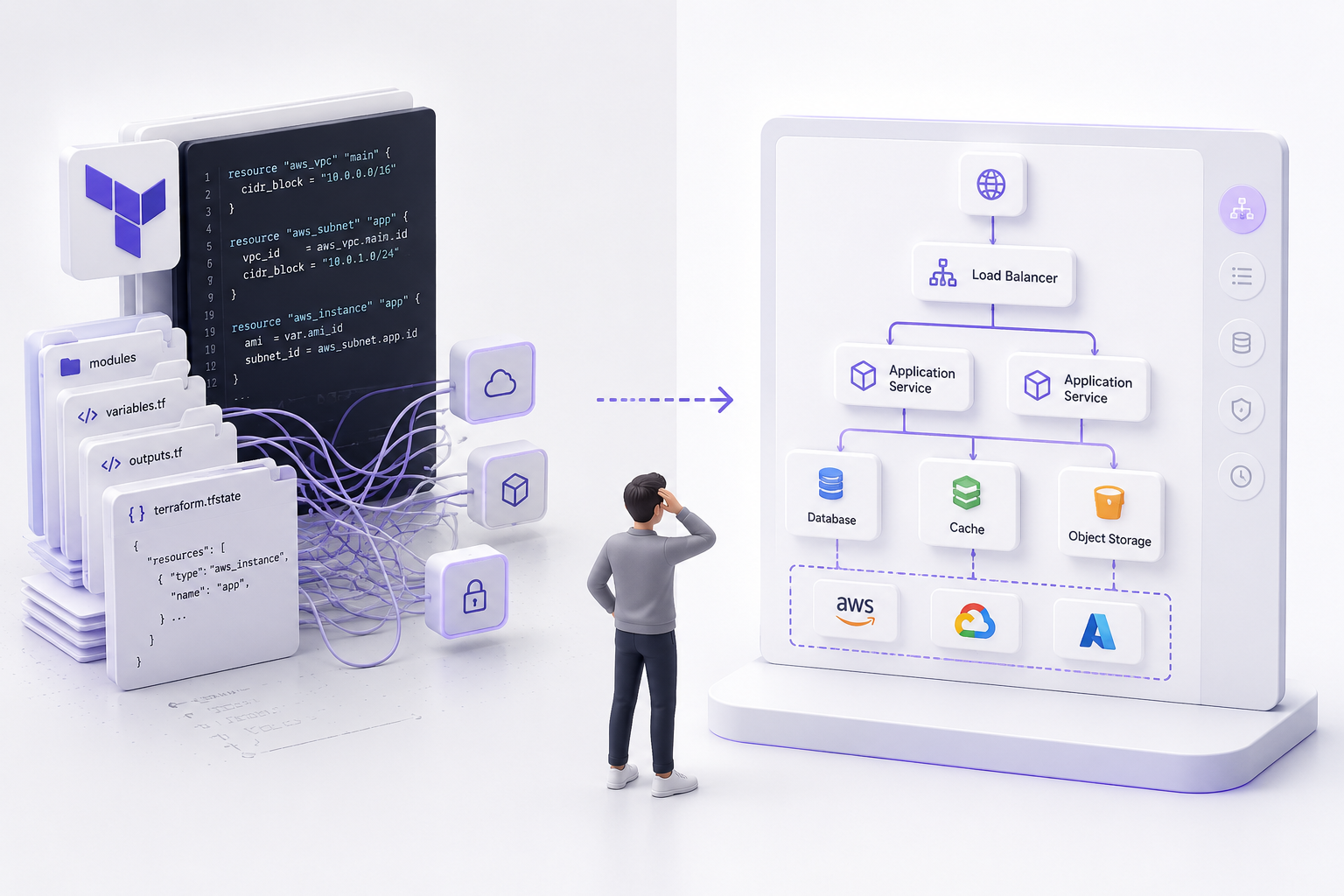
Owning your cloud does not mean manually configuring everything through AWS, Google Cloud, or Azure dashboards. It also does not mean every team must become a platform engineering organisation overnight.
Infrastructure ownership means the resources that power your application belong to your environment, your cloud account, your security model, and your operational strategy.
This matters because control becomes increasingly important as applications grow. Early-stage teams may care mostly about deployment speed. Mature teams care about reliability, security, cost optimisation, compliance, observability, multi-region architecture, and the ability to evolve without being boxed in by platform limitations.
Historically, teams had two imperfect options.
The first option was raw cloud infrastructure. This offered flexibility and ownership, but required deep cloud expertise. Teams had to manage networking, servers, databases, IAM, DNS, scaling, monitoring, security, and deployment pipelines directly.
The second option was managed hosting. This offered simplicity, but reduced control. Teams could deploy faster, but often had less visibility into how infrastructure was organised and fewer options when they needed custom architectures.
Gateways exists to close this gap. It gives teams the ownership benefits of running in their own cloud while reducing the operational complexity that normally comes with managing cloud resources directly.
Why Ownership Matters for Cost Control
Cloud cost is not just a monthly invoice. It is a function of architecture, traffic, regions, bandwidth, compute efficiency, storage usage, data transfer, scaling behaviour, and operational flexibility.
When a team runs entirely inside a managed platform, its cost structure is shaped by that platform’s pricing model. The team pays for convenience, abstraction, and the infrastructure layer beneath it. That may be manageable early, but it can become restrictive as traffic grows, services multiply, and usage patterns become more complex.
Owning cloud infrastructure gives teams more direct access to provider-native economics. They can choose instance families, storage classes, regions, networking patterns, managed databases, caching strategies, and optimisation policies based on workload needs. They can use free tiers, committed-use discounts, reserved capacity, startup credits, or cloud-provider-specific cost controls where appropriate.
Gateways strengthens this advantage by making ownership easier to operate. Instead of forcing teams to choose between platform simplicity and cloud economics, Gateways lets teams deploy into their own AWS, Google Cloud, or Azure account through a simpler visual workspace. That means teams can preserve cost flexibility while avoiding the friction of managing everything manually.
Cost control improves when teams have both visibility and choice. Gateways is designed to provide both.
Why Ownership Matters for Portability
Vendor lock-in is not always obvious at the beginning. It often starts with small dependencies: a deployment workflow, a database configuration, a proprietary networking model, environment-specific assumptions, or operational habits tied to a platform’s dashboard.
Over time, these dependencies compound. The longer a system runs inside a managed platform’s infrastructure model, the harder it may become to move. Migration is rarely just a matter of copying code. It can require rethinking networking, data storage, secrets, deployment pipelines, observability, domains, scaling behaviour, and team workflows.
Infrastructure ownership reduces this risk.
When resources live inside your cloud account, the system is closer to standard cloud infrastructure. The team retains direct control over the environment and can evolve architecture based on business needs rather than platform boundaries.
This is one of the core reasons Gateways is positioned as an alternative to major managed hosting providers. It gives developers the convenience they expect from modern deployment platforms, but without forcing the infrastructure to live inside someone else’s runtime.
In other words, Gateways simplifies operations without taking ownership away.
Why Ownership Matters for Security and Compliance
Security teams care about where infrastructure runs, who has access, how permissions are managed, how logs are captured, and how systems are isolated. As companies grow, these questions become more important.
In a platform-owned hosting model, teams often depend on the platform’s security boundaries, visibility, and integration capabilities. That can be acceptable for some workloads, but it may not satisfy teams with stricter security, regulatory, or enterprise requirements.
Owning infrastructure inside AWS, Google Cloud, or Azure allows organisations to align workloads with their existing cloud security posture. They can use native identity systems, cloud IAM policies, private networking, centralised logging, provider-native monitoring, and internal governance practices.
Gateways supports this model by acting as an operational console rather than replacing the customer’s cloud. It helps teams manage resources visually while preserving the cloud account as the source of infrastructure ownership. This is important for teams that want simplicity, but cannot afford to lose control over where systems live and how they are governed.
Security should not be an afterthought added after a product scales. It should be part of the infrastructure model from the beginning.
Terraform Helped Teams Own Infrastructure, But Usability Is Still a Challenge
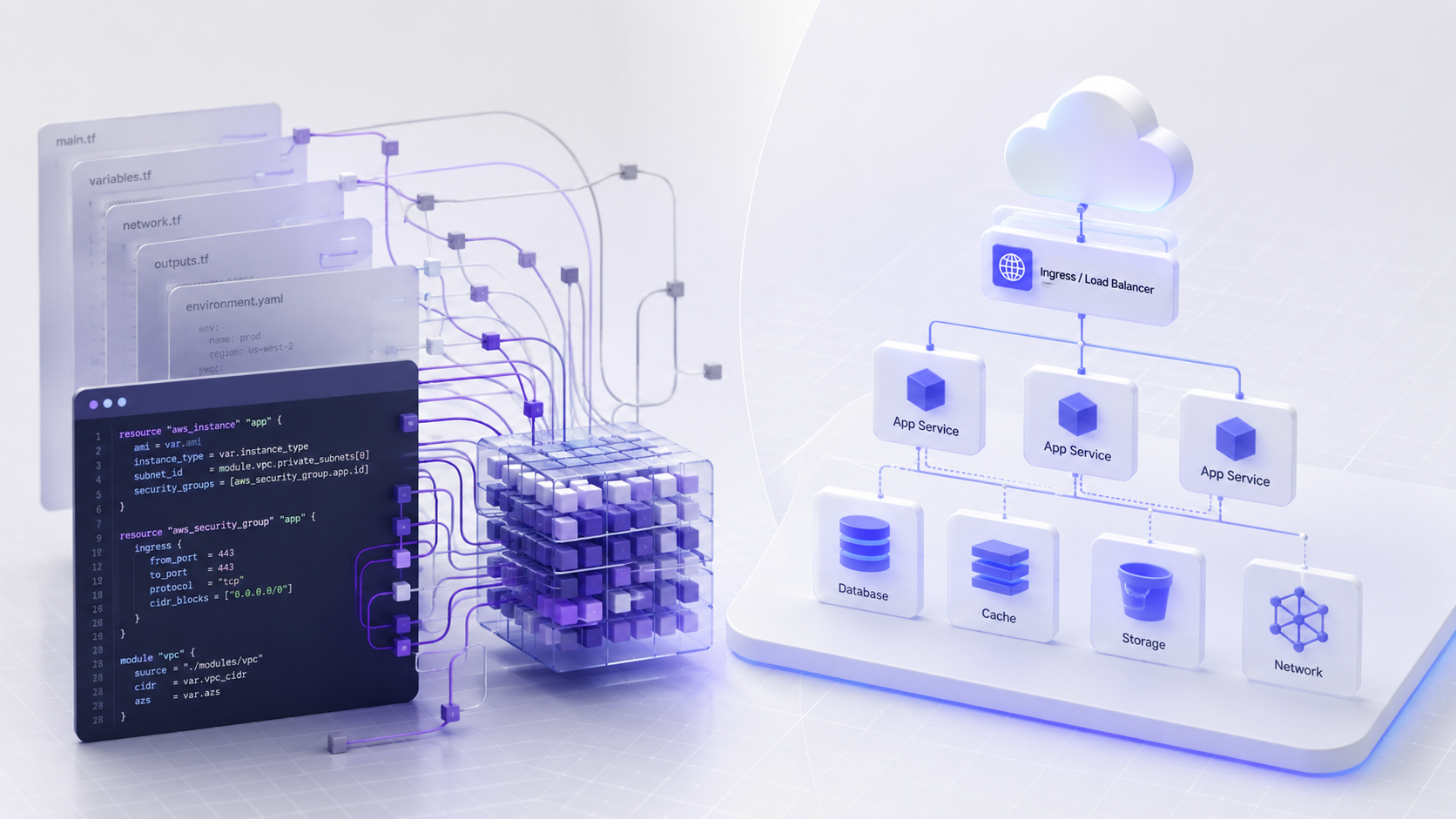
Infrastructure as Code became popular because teams needed a better way to manage cloud resources consistently. Terraform, for example, allows teams to build, change, and version cloud and on-prem resources through human-readable configuration files that can be reused, shared, and version-controlled. HashiCorp describes Terraform as a tool for provisioning and managing infrastructure across cloud platforms and other services through APIs.
This was a major improvement over manual cloud configuration. But Terraform and other IaC tools still require teams to operate through code, state, modules, plans, reviews, variables, and provider-specific configurations. For platform teams, that may be appropriate. For many product teams, it can feel heavy.
The challenge is that ownership and usability have often lived on opposite sides of the tooling landscape. Terraform gives teams infrastructure ownership, but requires infrastructure expertise. Managed hosting gives teams usability, but often reduces ownership.
Gateways is built for the middle path.
It gives teams a visual way to deploy, connect, clone, and manage infrastructure in their own cloud account. It does not ask teams to give up ownership to get usability. It also does not require every infrastructure workflow to start in configuration files.
For many teams, that is the practical evolution of cloud operations: ownership with a better interface.
Visual Infrastructure Makes Ownership More Useful
Owning infrastructure is only valuable if teams can understand and operate it.
This is where visual infrastructure becomes important. Cloud systems are not just lists of resources. They are relationships between applications, databases, storage buckets, servers, networks, firewalls, regions, DNS, deployment sources, and environments.
When these relationships are hidden across dashboards, YAML files, Terraform modules, or disconnected tools, ownership becomes harder to use. Teams may technically own the infrastructure, but still struggle to understand what is running and how it connects.
Gateways turns cloud infrastructure into a visual workspace. Resources are represented as part of a live architecture canvas where teams can see, organise, and manage systems more naturally. This makes infrastructure easier to reason about, especially as services grow across environments and regions.
The benefit is not cosmetic. It changes how teams work.
Developers can see what an application depends on. Operators can understand resource relationships. New team members can onboard faster. Architecture discussions become clearer. Environment cloning becomes easier. Multi-region systems become less abstract.
Infrastructure ownership becomes more practical when the infrastructure is visible.
Repeatable Environments Without Rebuilding From Scratch
One of the major advantages of owning your cloud is the ability to define infrastructure patterns that match your product and business. But repeatability can become difficult if every environment requires manual setup or complex configuration.
Gateways addresses this through templates, copying, and cloning workflows. Teams can create a working architecture once, then reuse it across development, staging, production, customer-specific environments, or regional deployments.
This is especially valuable for teams that need consistency without slowing down.
A product team should not need to rediscover infrastructure decisions every time it creates a new environment. A startup should not need to rebuild its staging architecture from scratch. A growing SaaS company should not need to rely on fragile manual setup steps to replicate systems.
Gateways makes repeatable environments more accessible by turning infrastructure patterns into reusable visual systems. This gives teams the practical benefits of repeatability while keeping workflows understandable for developers who may not specialize in infrastructure code.
Multi-Cloud Choice Is Becoming Strategic
Cloud provider choice is no longer just a technical preference. It can affect cost, compliance, latency, customer requirements, regional availability, managed service capabilities, and long-term negotiating power.
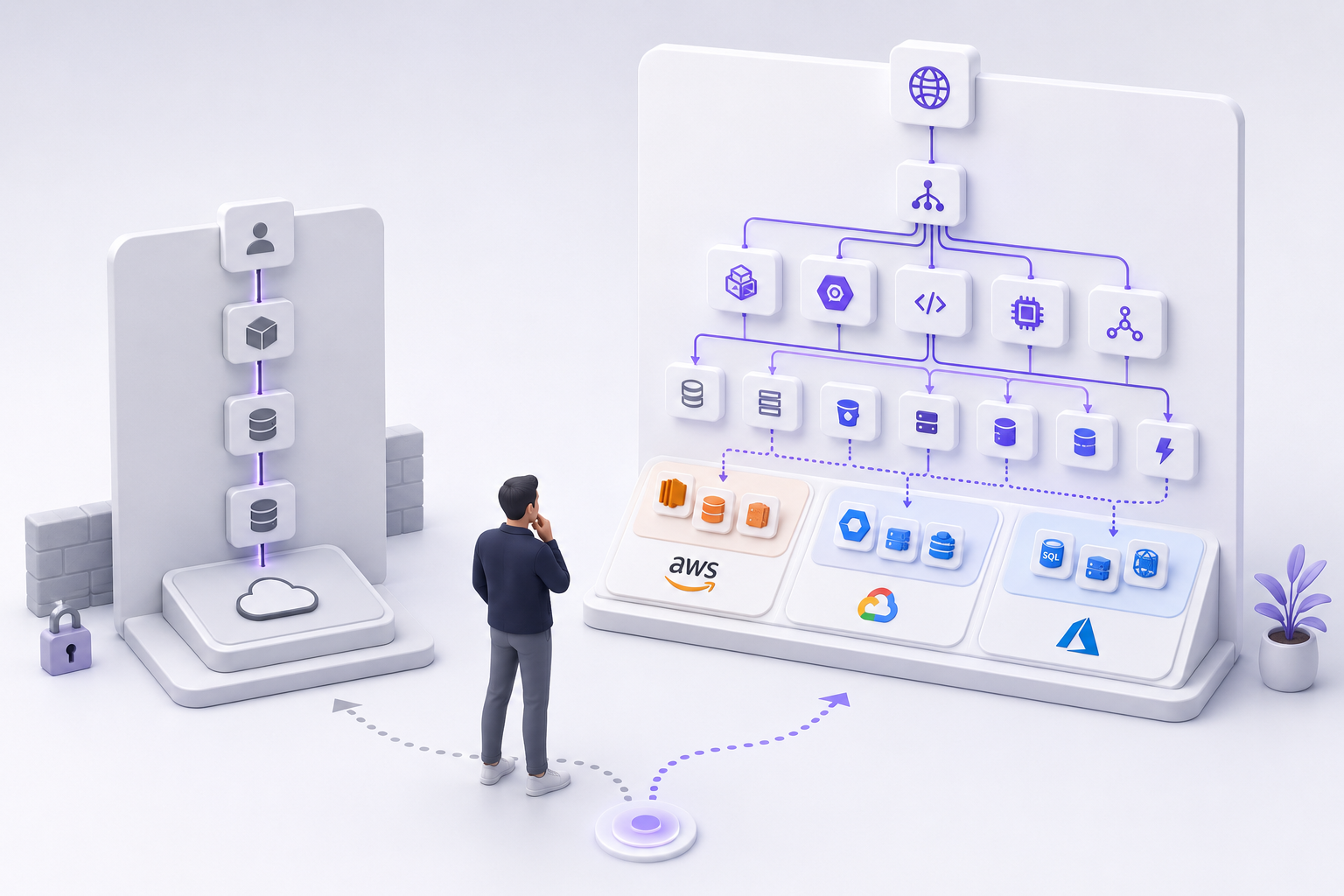
A platform that forces teams into one infrastructure model limits strategic flexibility. A platform that supports AWS, Google Cloud, and Azure gives teams more room to make infrastructure decisions based on business needs.
Gateways supports this approach by allowing teams to work across major cloud providers while maintaining a consistent operational experience. Instead of learning entirely different workflows for each provider or becoming locked into a managed platform’s infrastructure, teams can use Gateways as the visual operating layer for the cloud they choose.
This is particularly important for companies that already have cloud commitments, enterprise accounts, preferred vendors, compliance requirements, or workloads that benefit from provider-specific services.
Owning your cloud means choosing the cloud that makes sense for your business, not simply accepting the infrastructure layer chosen by a hosting provider.
Gateways as an Alternative to Managed Hosting Providers
The next generation of cloud platforms will not simply be about faster deployment. Deployment speed is now table stakes. The real differentiators are ownership, visibility, portability, economics, and operational clarity.
Gateways is positioned as an alternative to managed hosting providers because it offers a different model:
- Deploy with modern simplicity
- Run inside your own AWS, Google Cloud, or Azure account
- Manage resources visually
- Keep infrastructure ownership
- Clone repeatable environments
- Operate multi-region systems
- Avoid unnecessary platform lock-in
- Maintain provider-level flexibility
This model is especially relevant for teams that have outgrown black-box hosting, are evaluating alternatives to Render, Railway or Vercel style deployment platforms, or want a more usable alternative to managing everything through Terraform and cloud consoles.
Gateways does not argue that convenience is unimportant. Convenience matters deeply. But convenience should not require surrendering ownership.
The better model is simplicity on top of infrastructure you control.
Final Thoughts
Infrastructure ownership is becoming a strategic advantage.
As software products become more complex, teams need more than easy deployment. They need control over where workloads run, how resources connect, how costs scale, how security is managed, and how architecture evolves over time.
Managed hosting platforms helped make deployment easier, but they often do so by placing infrastructure inside someone else’s operational boundary. That trade-off can feel small at the beginning, but it becomes more important as teams scale.
Gateways offers a different path. It gives developers the simplicity they expect from modern deployment platforms while keeping infrastructure inside their own cloud accounts. It brings visual clarity to cloud operations, supports major cloud providers, enables repeatable environments, and helps teams avoid long-term lock-in.
Owning your cloud should not mean accepting unnecessary complexity. And simplifying deployment should not mean giving up control.
Gateways is built for teams that want both.